Artist Statement
進化的移行と予期されたオーパーツ
Evolutionary Transitions and Anticipated OOPArts
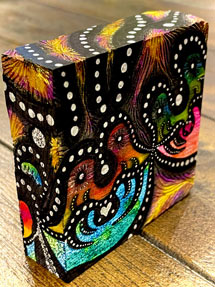
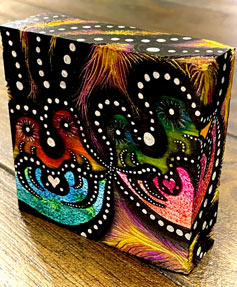
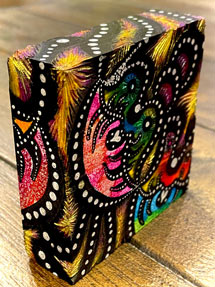
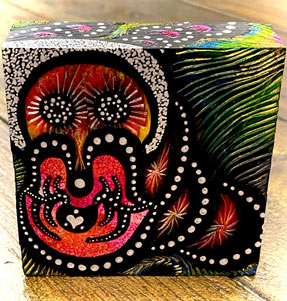
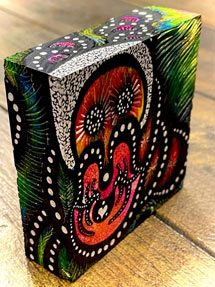
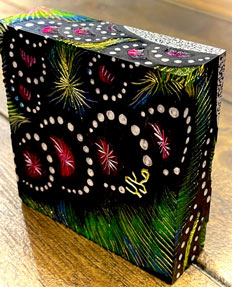
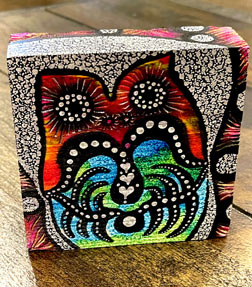
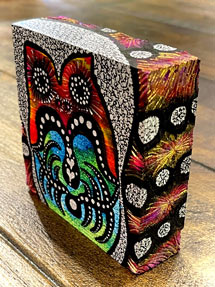
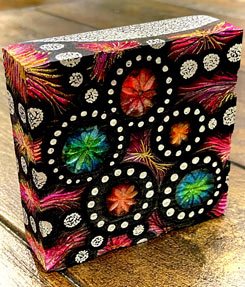
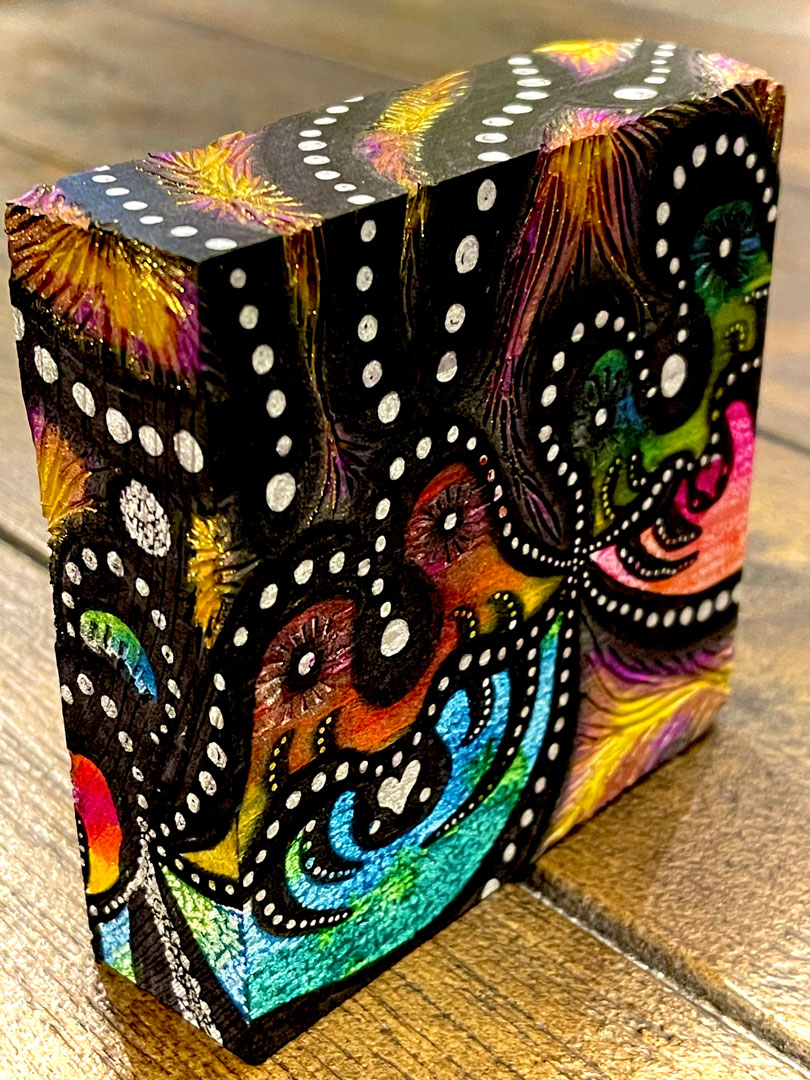
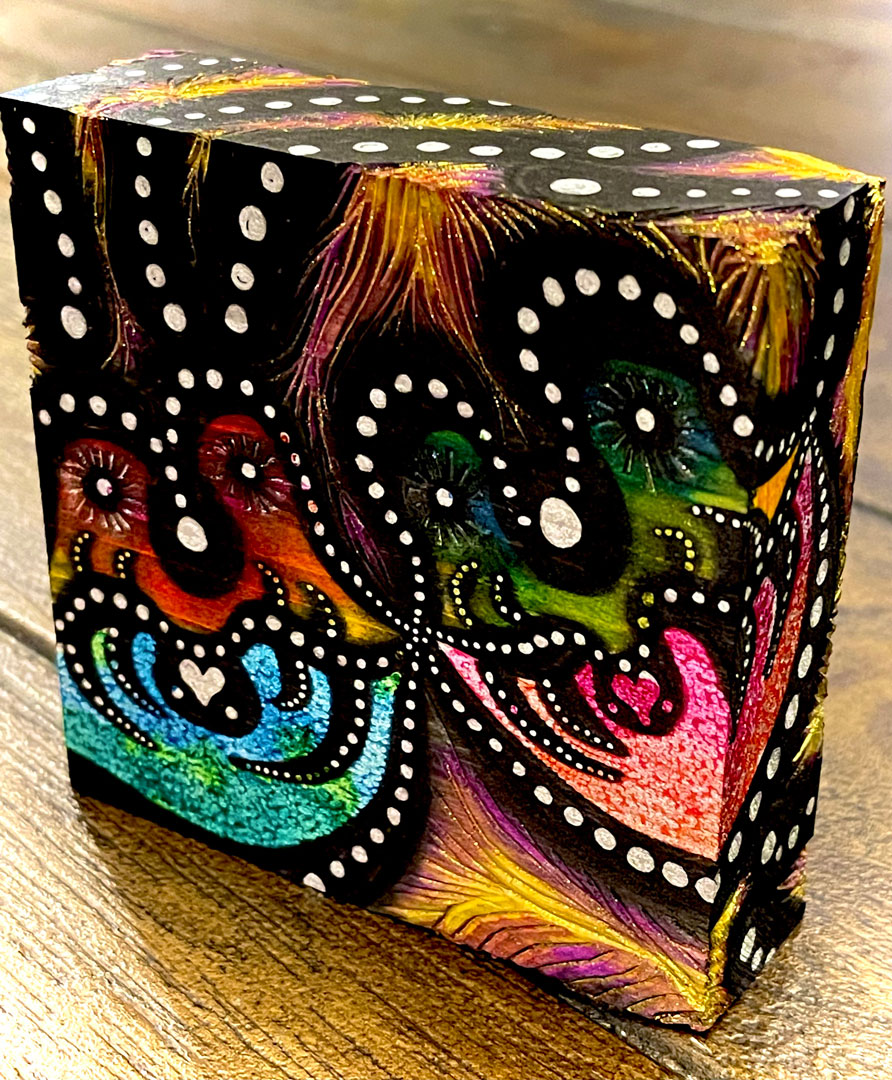
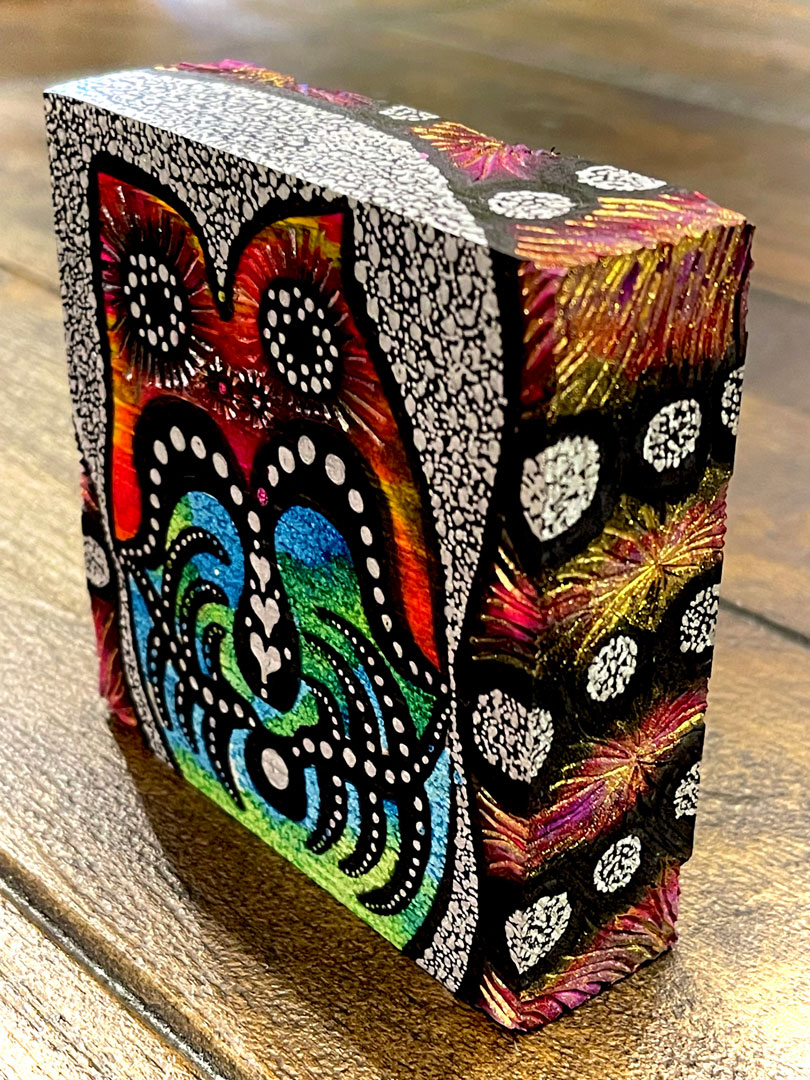
溝渕ゆう子《OOPARTS(オーパーツ)》は、本展テーマ「過去・現在・未来」を、生命における「主要な進化的移行(Major Evolutionary Transitions)」の連鎖として再構成するものである。
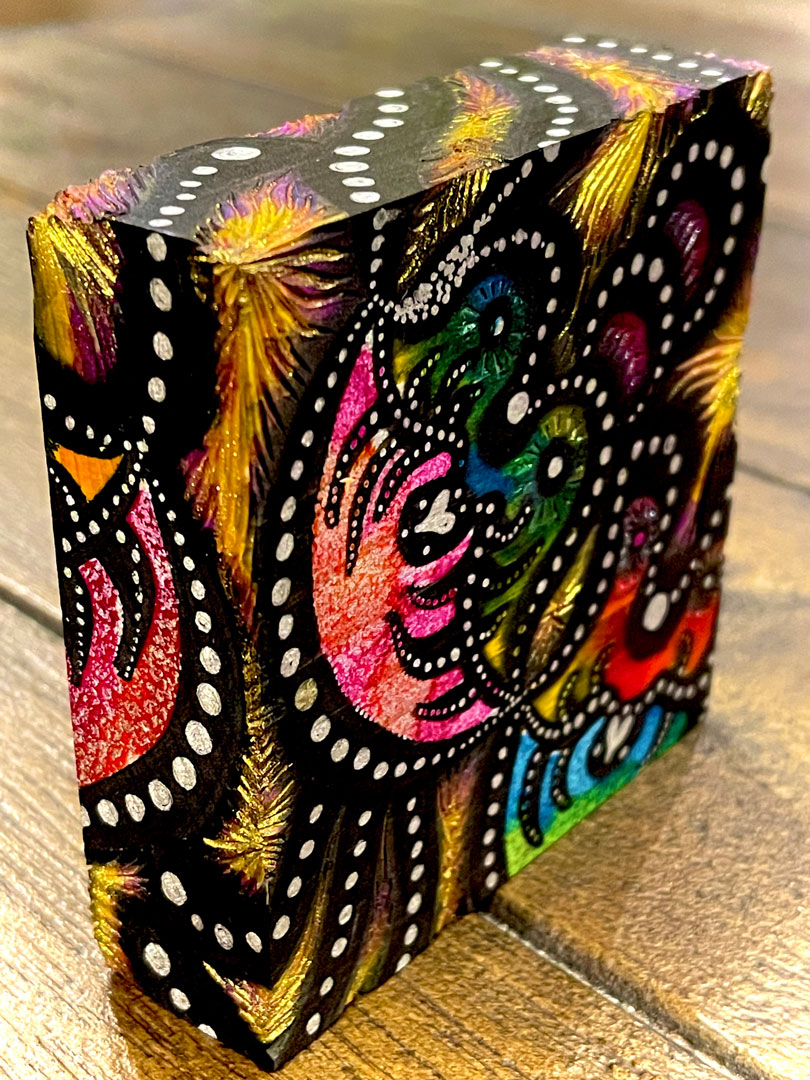
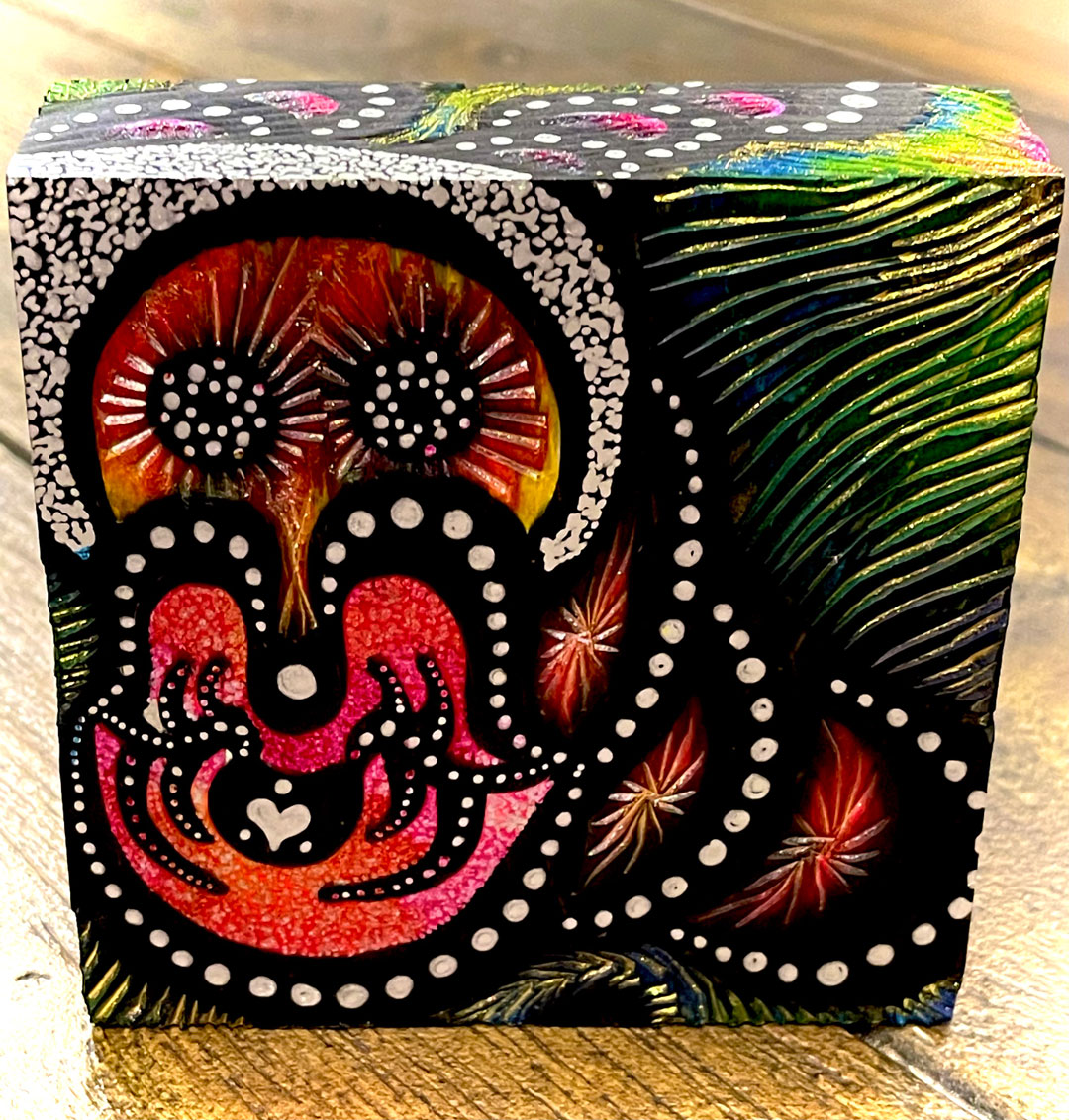
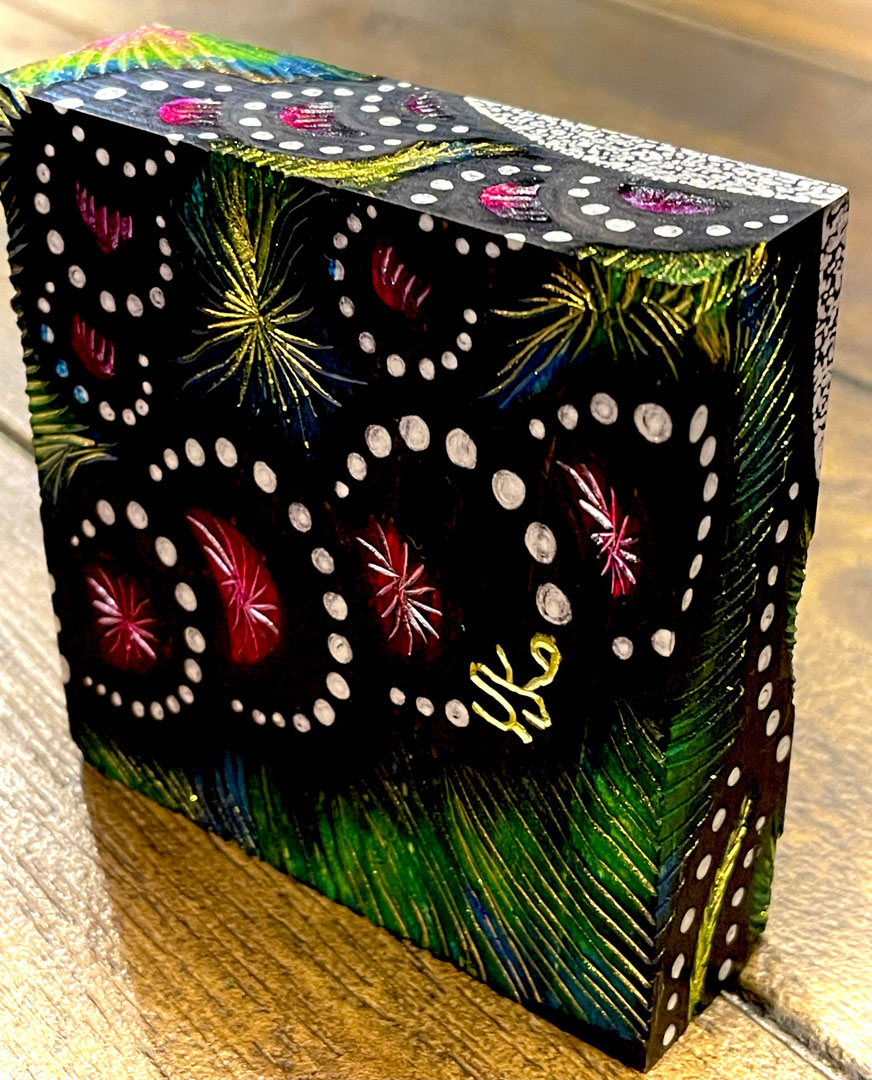
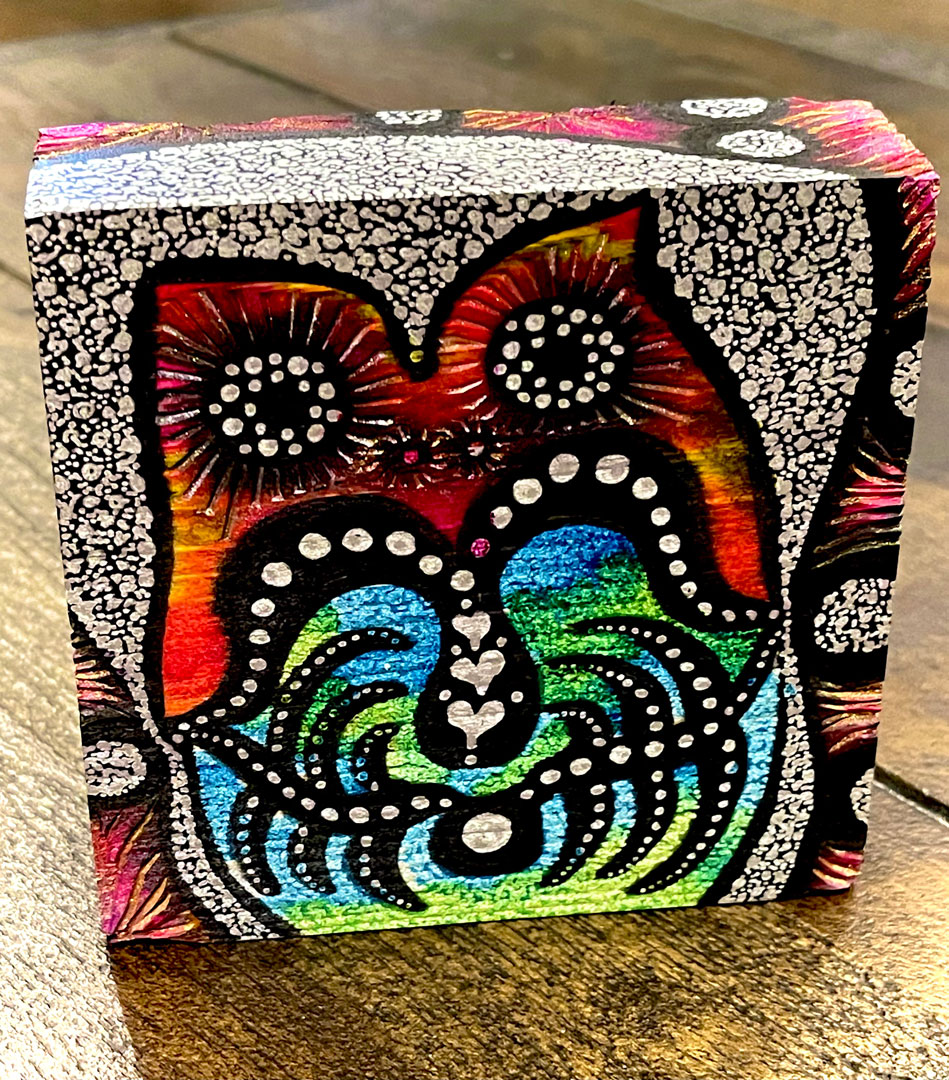
進化的移行とは、生物が新たな組織階層や情報保持の方式を獲得し、不可逆的な構造転換が生じる出来事を指す。木塊に刃を入れ、層を露出させる溝渕の行為は、この不可逆的な階層変化を物質へと直接刻み込む試みである。
木材の繊維が断たれ、色層が沈殿し、内部構造が組み替えられるプロセスは、生物が階層を越える際に生じる構造転換の痕跡と等価である。彫りの角度、圧力、断面の深度など、すべては再現不能の一次情報として物質へ記録される。生命が情報を「物質の内部構造」として継承してきた原理に基づき、これらの痕跡は不可逆の時間を宿している。
本作が《OOPARTS》と名付けられたのは、単に工芸領域における異物性を示すためだけではない。それは、溝渕の介入によって露呈した物質の内部構造が、直線的な時間の秩序から逸脱し、既存の座標に収まらない「ゆらぎ(fluctuation)」を内包していることに由来する。
ここに現れる痕跡は、自然界における過去の蓄積(年輪)とも、現在の状態(素材)とも異なる。物質内部の応答と、溝渕固有の表現行為が交差することで、時間や階層の整合性にわずかな撹乱を生じさせるのだ。この「ゆらぎ」こそが、作品を特定の時代性や制度的分類に回収できない、独自の構造的地位へと押し上げている。
この構造原理は、時代や制度の変化に左右されない。 溝渕の実践の核は、外部的なモチーフではなく、「不可逆性・階層変化・物質的記録」という、生命史を貫く普遍的な三つの力学に支えられている。 ゆえに、いかなる時代環境に置かれても、人間が人間である限り、作品内部が示す「進化的移行の痕跡」は変質せず、まぎれもなく溝渕ゆう子の作品として識別され続けるのである。
Evolutionary Transitions and Anticipated OOPArts
Yuko MIZOBUCHI’s OOPARTS reconstructs the exhibition’s theme of “Past, Present, and Future” as a chain of “Major Evolutionary Transitions” in life.
“Evolutionary transitions” refer to events in which an organism acquires new organizational hierarchies or modes of information retention, producing irreversible structural transformations. MIZOBUCHI’s act of driving a blade into a block of wood to expose its layers is an attempt to directly inscribe these irreversible hierarchical shifts into the material itself.
The process in which wood fibers are severed, color strata settle, and internal structures are recomposed is equivalent to the traces left when life undergoes structural transformations across hierarchical levels. The angle of the cut, the pressure applied, the depth of each cross-section—every element is recorded in the material as non-reproducible primary information. Based on the principle that life has long inherited information as “internal material structure,” these marks embody the irreversibility of time.
The title OOPARTS does not merely signal a sense of otherness within the field of craft. Rather, it arises from the way the internal structures revealed through MIZOBUCHI’s intervention deviate from linear temporal order, harboring a fundamental “fluctuation” that cannot be contained within existing coordinates.
The traces that appear here are neither the accumulated past of nature (such as growth rings) nor the simple state of the present. Instead, as the material’s own responses intersect with MIZOBUCHI’s singular expressive action, slight disturbances emerge in the coherence of time and hierarchy. It is this “fluctuation” that elevates the work into a structural position that cannot be subsumed by any specific era or institutional categorization.
This structural principle is not governed by shifts in time periods or institutional frameworks. The core of MIZOBUCHI’s practice is grounded not in external motifs but in three universal dynamics that run through the history of life: irreversibility, hierarchical transformation, and material inscription. Thus, regardless of the era, as long as humans remain human, the “traces of evolutionary transition” embedded in its internal structure will remain unaltered—and the work will continue to be unmistakably identified as that of Yuko MIZOBUCHI.